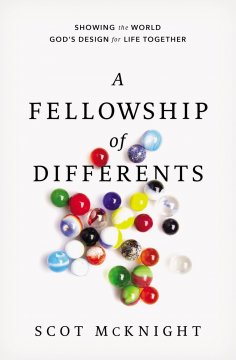
In A Fellowship of Differents, Scot McKnight writes about the differences between love in our culture and Christian love:
Our dictionary definition of love has, to use theological words, no eschatology. That is, it has no final goal other than perhaps the personal happiness of the one loved or the one who loves–as long as that lasts. But Christian love has direction. It aims at one person helping another to become Christlike. [p. 66, emphasis added]
Contrary to what culture tells us, there’s more to love than the other person’s happiness. Love considers the other person’s holiness as well. Christ became sin, who knew no sin, that in him we might become NOT his happiness but his righteousness (see 2 Cor 5:21). To be sure, we become joyful as a result of this process. But our joy is a benefit or product of this love, not its primary goal.
Does your love look more like our culture’s definition of love or Christ’s embodiment of love? I know mine looks much more like the former than the latter most times. May God in his graciousness continue to transform us through his own love into those who live and love as he did.

 Joshua Ray
Add your voice to the discussion